As the pace of digital transformation increases across industries, organizations in the United States are constantly pushed to release software faster, operate more reliably, and manage infrastructure more efficiently. This has made DaaS an increasingly strategic choice for startups, mid-sized businesses, and large enterprises.
Instead of investing heavily in extensive in-house DevOps teams, organizations are leveraging specialized DevOps as a Service companies in USA and DevOps consulting services to bring in much-needed upgrades to delivery pipelines, system reliability, and unlock development teams to innovate.
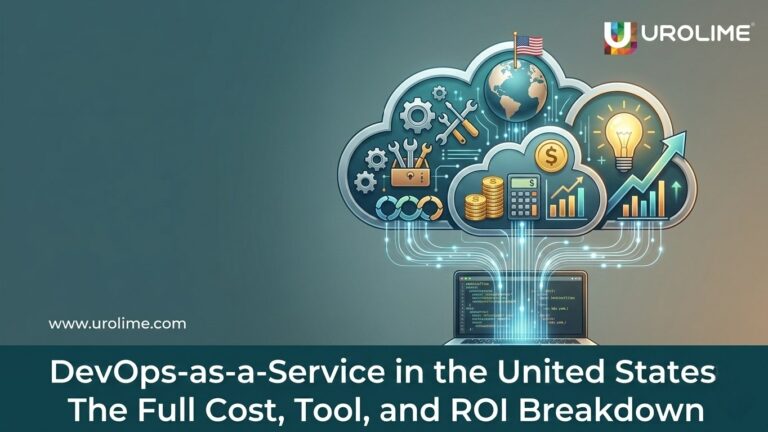
This blog provides a pragmatic, easy-to-understand breakdown of what DevOps-as-a-Service constitutes, the tools involved, how costs are structured, and how organizations should think about return on investment (ROI).
What is DevOps as a Service?
DevOps as a Service-DaaS is a managed or outsourced model whereby a third-party provider delivers DevOps capabilities as an ongoing service. These providers combine skilled engineers, proven processes, automation frameworks, and modern tooling to manage the full DevOps lifecycle.
DaaS puts much emphasis on continuous improvement instead of treating DevOps as a one-time setup for:
- Continuous Integration and Continuous Delivery -CI/CD
- Infrastructure Automation & Cloud Management
- Monitoring, Logging & Incident Response
- Automation of Security, Compliance, and Governance
- Developer productivity and platform engineering
DevOps consulting services often acts as strategic partners that help define DevOps roadmaps, build scalable platforms, and embed DevOps culture across teams.How Cost Structures Work with DevOps as a Service
When assessing the price of devops as a service in the USA, one key consideration will be on the customization, that it is not a one-size-fits-all affair. Costs are determined by its specific scope, complexity, and levels of responsibility taken on by a service provider rather than by line items in an estimate.
Keys factors that then influence cost include the following:
Services Scope
Everything from setting up the CI/CD pipeline to full-scale managed DevOps operations, including 24/7 monitoring and incident response. The higher the scope in breadth and depth, the higher will be the total investment.Complexity in Infrastructure
The number of applications, environments (development, staging, production), cloud platforms, and deployment architectures directly influences effort and cost. The multi-cloud and hybrid usually require more advanced expertise.
Level of Automation
Organizations that start with low automation often have a higher engineering effort up front. As automation matures, the operational effort goes down and efficiency improves.
Security and Compliance Requirements
This, in turn, increases the complexity of the service since industries such as healthcare, finance, and SaaS with enterprise customers usually demand more security controls, audits, and compliance tooling.
Engagement Model
Other factors that influence the cost of engagement include whether the engagement is:
- A fully-managed, ongoing service
- A time-bound consulting engagement
- A hybrid model with advisory support and internal execution
Mature DevOps as a service companies in the state will be transparent about what is included, what is optional, and how services scale with business needs.
Common Toolchains Utilized by DevOps Service Providers
A strong DevOps as a Service offering is built upon a contemporary, well-integrated tool ecosystem. Although tools may vary according to the provider and the needs of the client, most devops consulting services in USA work across categories such as:
Source Control and CI/CD
- Git-based repositories
- Pipelines of automated build, test, and deployment
- Release orchestration and rollback mechanisms
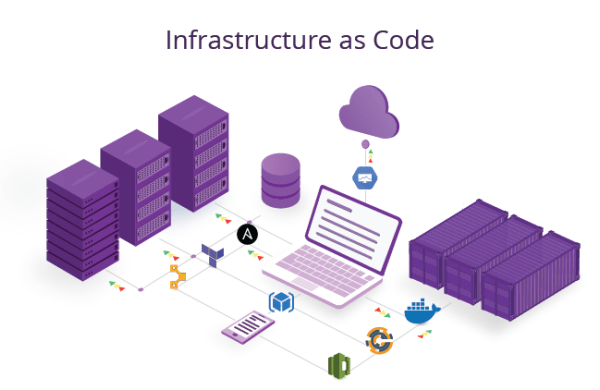
Infrastructure as Code, IaC
- Declarative infrastructure definition
- Automated Provisioning and Environment Consistency
- Changes in Version-controlled infrastructure
Containers and Orchestration
- Containerization for portability and scalability
- Orchestrated platforms for microservices management
- Automation: Scaling and self-healing systems
Monitoring and Observability
- Centralized logging and metrics
- Application and infrastructure monitoring
- Alerting and incident response workflows
Security and Compliance Automation
- Static and dynamic code analysis
- Dependency vulnerability scanning
- Policy enforcement and audit readiness
For DaaS, the value is not just about tool use but about how those tools are integrated into repeatable well-governed processes.Understanding ROI from DevOps as a Service
In general, return on investment for DevOps as a Service in USA is realized via efficiency gains along with risk reduction and faster business outcomes instead of merely direct cost reductions.
Key areas where the ROI is generated
Improved Developer Productivity
By reducing manual work, deployment friction, and environmental problems, development teams can focus more on building features and less on managing infrastructures.
Faster Time to Market
Automated pipelines and standardized environments help release faster and more frequently because they let the business respond better to market demand.
Reduced Operational Risk
Proactive monitoring, automated testing, and repeatable deployments reduce outages, incidents, and costly downtime.Lower Long-term Operational Overhead
Instead of hiring and continuously training specialized DevOps talent in-house, organizations rely on shared expertise sourced from DevOps as a service companies based in USA.
Scalability Without Disruption
Well-designed DevOps platforms scale with business growth, without constant re-architecture.
Organizations that can measure baseline performance and track improvements over time are best positioned to clearly demonstrate ROI.
KPIs to Measure Success
It is here that the businesses should align on key metrics with the DevOps partner to ensure accountability.
Technical KPIs
- Deployment frequency
- Change lead time
- Mean time to recovery
- Change in failure rate
- Pipeline Reliability
Business KPIs
- Release velocity
- Engineering throughput
- Availability of the system
- Customer experience metrics
- Indicators of operational efficiency
All these metrics are tracked in a very transparent manner, along with providing dashboards and regular reporting, by leading DevOps consulting services in the USA.
Conclusion
DevOps-as-a-Service in the USA let organizations take a practical route to modern software delivery without operational overhead to build everything in-house.By combining the right tools, experienced engineers, and proven processes, it helps businesses improve speed, stability, and scalability while maintaining control and visibility.