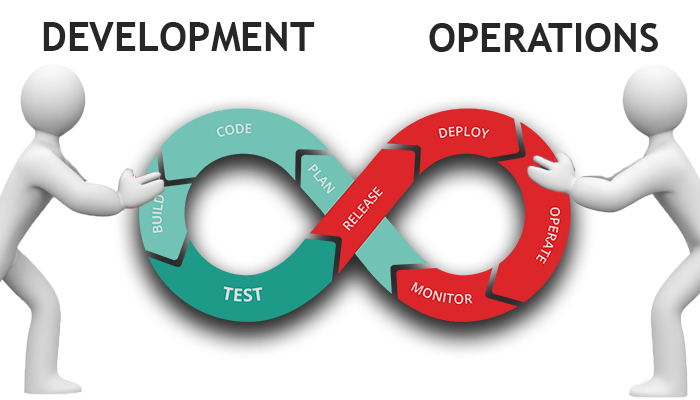

Over the last few years, DevOps has evolved from a disruptive idea to an industry baseline. But the ground reality is, yet in 2026, many organizations, especially those operating at scale are quietly acknowledging a hard truth: DevOps alone is no longer enough.
The Evolution: From DevOps to Platform Thinking
DevOps was never a toolset, rather it was a cultural as well as an operational shift.The practice has broken down silos between development and operations, which in terms ensured faster delivery, tighter feedback loops, and improved collaboration.
However, as systems scaled, so did complexity:
- Multi-cloud and hybrid environments
- Kubernetes and container orchestration
- Microservices sprawl
- Increasing compliance as well as security demands
In many cases, where DevOps teams became bottlenecks instead of enablers-Platform Engineering pitched in-not as a replacement, but as an evolution.
What DevOps Got Right and Where It Struggles
DevOps have brought in essential practices like the :
- CI/CD pipelines
- Infrastructure as Code (IaC)
- Automation-first thinking
- Shared ownership
But in practice, organizations often faced the following challenges like:
- Toolchain fragmentation
- Developer cognitive overload
- Inconsistent environments
- Scaling challenges across teams
Even with strong Devops Consulting Services, the journey is hard and it calls for reinvention of infrastructure patterns repeatedly.
This led to a critical question:
Should every developer really be an infrastructure expert?
Platform Engineering: The Missing Layer
Platform Engineering services addresses this gap by building internal developer platforms (IDPs) which are standardized, reusable systems that abstract complexity.
Instead of every team managing pipelines, environments, as well as deployments independently, a platform team provides:
- Self-service infrastructure
- Golden paths for deployment
- Built-in security and compliance
- Standardized observability
This reduces friction dramatically.
In our experience, organizations adopting Platform Engineering saw:
- Faster onboarding where days were converted to hours
- Reduced production incidents
- Improved developer satisfaction
Platform Engineering doesn’t eliminate DevOps—it operationalizes it at scale.
Where Site Reliability Engineering (SRE) Fits In
While Platform Engineering focuses on developer experience, Site Reliability Engineering ensures system reliability.
SRE introduces:
- SLIs/SLOs (Service Level Indicators/Objectives)
- Error budgets
- Automated incident response
- Reliability-first architecture
In mature setups:
- DevOps enables delivery
- Platform Engineering enables scale
- Site Reliability Engineering ensures stability
This factor is what high-performing organizations rely on in 2026.
DevOps vs Platform Engineering: The Real Difference
The conversation is often framed as a competition. That’s misleading.
The real distinction lies in who owns complexity.
DevOps model:
- Teams own infrastructure as well as pipelines
- Flexibility is high
- Low Standardization
Platform Engineering model:
- Platform team owns infrastructure abstraction
- Developers consume standardized services
- Consistency and scalability improve
In simpler terms:
DevOps teaches teams how to build systems.
Platform Engineering builds systems so teams don’t have to.
Lessons from Real Implementations
Across multiple engagements that we had , a few patterns consistently emerged:
1. Standardization Beats Flexibility at Scale
Too much flexibility leads to fragmentation. Platform Engineering introduces guardrails without blocking innovation.
2. Developer Experience Is a Business Metric
Reducing friction directly impacts delivery speed as well as retention. Internal platforms act as force multipliers.
3. Kubernetes Alone Is Not the Solution
Many teams migrate (as seen in transitions from Docker Compose to Kubernetes) but fail to simplify usage. This implies, without a platform layer, Kubernetes increases complexity.
4. Reliability Must Be Designed, Not Just Added
SRE practices must be integrated early, and not retrofitted after incidents.
What Works in 2026: A Practical Model
The most effective organizations follow a layered approach:
Foundation:
- Cloud infrastructure
- Kubernetes orchestration
- Observability stack
Platform Layer (Platform Engineering):
- Internal developer platform
- Self-service workflows
- Policy-as-code
Reliability Layer (Site Reliability Engineering):
- SLAs/SLOs
- Incident automation
- Resilience engineering
Delivery Layer (DevOps Practices):
- CI/CD pipelines
- Agile workflows
- Continuous feedback
This model balances speed, stability, as well as scalability.
When to Invest in Platform Engineering
Consider Platform Engineering consulting if:
- There are multiple product teams
- Kubernetes adoption is growing
- Developers spend excessive time on infrastructure
- There is an increasing count in Incidents
- Toolchains are inconsistent
At this stage, investing in a platform team delivers exponential returns.
Final Take: It’s Not Either/Or
DevOps is the foundation. Platform Engineering is the scale layer. SRE is the safety net. Organizations that succeed in 2026 are not choosing between them rather they are the ones integrating all three intelligently.
The goal has never been to adopt a methodology rather it’s to deliver reliable software, faster, with less friction.
DevOps started that journey.
Platform Engineering is completing it.
Site Reliability Engineering ensures it doesn’t break along the way.